
Bill Gates Was Stunned Three Times. The Third Is on My Desk.

Author:

Steven Van Solkema

Time for reading:

6 min read

Bill Gates Was Stunned Three Times. The Third Is on My Desk.

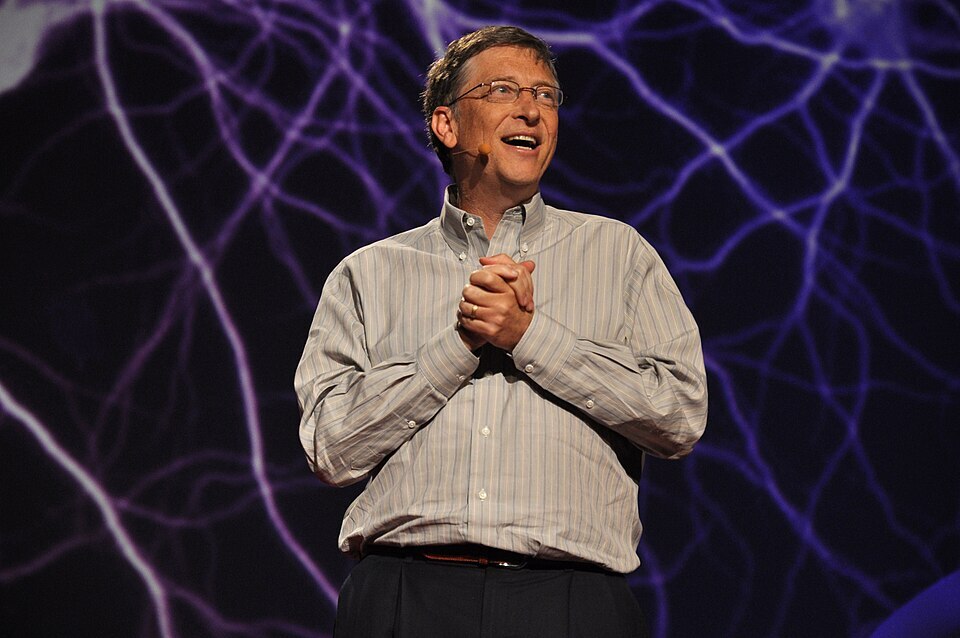
"The idea that now these things are in a meaningful sense better than I am is like: What the hell?"

That's Bill Gates, in the New York Times on August 26, talking about Claude Code. I read it twice. Then I put the paper down (fine, the laptop) and went back to the terminal window I'd left open, where that same tool was halfway through refactoring something for me.

On August 26, 2026, Bill Gates published a GatesNotes essay warning that the AI era will be "one of the most turbulent times in human history," and gave an interview to the New York Times in which reporter Karen Weise wrote that technology had truly stunned Gates three times: the graphical user interface in 1980, the OpenAI demo at his house in 2022 that became ChatGPT, and Claude Code, Anthropic's coding tool, in 2026.

I want to be careful with that list, because it has already been passed around a little loosely. The "three times" line is Weise's reporting of what Gates told her, and the Claude Code quote above is Gates's own words in that interview. Gates himself put it more bluntly on the GeekWire podcast three days later: "I was shocked by ChatGPT, and I was shocked by Claude Code. Those are both things where I went, oh my God."

So the most successful software person of the last fifty years has had three of those moments. I have had exactly one. It's the same one he had this year, and I've been living inside it every working day since.

What did Bill Gates actually say about Claude Code?

Coding, Gates told the Times, is the subject he knows best, and Claude's abilities shocked him. In the MIT Technology Review the same week he got specific: "I was stunned at the coding. Claude code, the context buffer, the agentic approach, just the model underneath."

Notice what he did not say. He did not say it writes nice functions. Every model has written nice functions for a couple of years. He named the context buffer and the agentic approach. That's the part that matters, and it's the part that most people who have not sat down with it for an afternoon still miss.

Here is the plainest way I can put what changed. The old pattern was: I describe a task, the model produces text, I copy it somewhere and find out whether it works. The new pattern is: I describe an outcome, and the tool reads the files, decides what to look at next, runs the thing, reads the error, fixes it, and comes back to me with a result and a question. I am still deciding. I am just not typing.

I came to this from trading operations, where being surrounded by systems that are faster than you at a specific job is a normal Tuesday. Nobody in an options business feels threatened by a pricing engine. You feel threatened by not understanding what it did. That framing has served me well here. Whether the tool is "better than me" at producing code stopped being an interesting question a while ago. Whether I can see what it did, and stop it when I should, is the one I get paid to answer.

Why a warning from Gates is good news for small teams

Most of the coverage led with the fear, and the fear is real. Gates wrote that "the smartest cybersecurity experts I know are scared about the next few years." He told the Times that in private, "people who understand how good this stuff is, and how much better it's getting, they're very worried," and that the industry is downplaying it. On self-regulation: "No, thanks!"

First, own the thing. Gates's turbulence is a story about concentrated power and a missing plan. The practical translation for a team like ours, or like yours, is to stop renting capability you cannot inspect. That's why we license tools, agents, skills and prompts with source included, running on your infrastructure. It sounds like a sales line (it's also on our products page, I'll admit that), but it comes from the same place as Gates's worry. If the tool is going to be "better than you" at a chunk of your work, you had better be able to open it up.

Second, decide where the human sits before the agent runs, and write it down. We wrote a whole post on this earlier this year, and the Gates interview made me want to reprint it. Oversight placed according to consequence is the difference between a tool that shocks you in the good way and a tool that shocks you at 3 a.m.

Third, take the attack surface seriously. The same connectivity that makes an agent useful (it can read your email, your files, your ticketing system) is what makes it dangerous, and Gates is right that defenders are behind. Our post on the Model Context Protocol goes into the specifics. Read it before you wire anything to production.

The personal part

I said I've had one of these moments. Here's what it was, for the record.

Demos are easy to be impressed by, and I have watched a lot of them throughout my career in finance and technology, so mine came somewhere less dramatic. It was the first week I stopped opening a code editor first thing in the morning and started opening Claude Code instead, and then I realized, only two days later, that the shift had happened without a decision.

Gates said something on GeekWire that I keep repeating to people: "I joke with people that I used to have Claude-like people that I would send email to, but they were so slow, and there were some topics they didn't actually know." I spent a career sending those emails. Now the reply comes back in ninety seconds, with the diff attached, and the honest reaction is exactly the one Gates had. Followed, about a minute later, by the second reaction, which is the one I'd like more people to have: OK ... so what do I check, and who is accountable when it's wrong.

That second reaction is the whole business we're building. Seriously. The tools and the training days are just the delivery mechanism ... the product is the habit of following the "what the hell" with "what do I check."

Gates said he rarely stops thinking about AI, "not because I have all the answers, but because the questions it raises are too consequential to leave to a small group of technologists." I'd put a smaller version of that on our door. The questions are too consequential to leave to the vendors, either. Open the tool. Look at what it did. Then decide.

He's been stunned three times in forty-six years. I don't know if I get a fourth. I'm fine with three.


Sources: Karen Weise, "Bill Gates Warns A.I. Is More Dangerous Than Big Tech Will Admit," The New York Times, Aug. 26, 2026. Bill Gates, "The turbulent AI era is here. The choices we make now are critical," GatesNotes, Aug. 26, 2026. GeekWire Podcast, "Bill Gates in his own words," Aug. 29, 2026. Mat Honan, MIT Technology Review, Aug. 26, 2026.

"The idea that now these things are in a meaningful sense better than I am is like: What the hell?"

That's Bill Gates, in the New York Times on August 26, talking about Claude Code. I read it twice. Then I put the paper down (fine, the laptop) and went back to the terminal window I'd left open, where that same tool was halfway through refactoring something for me.

On August 26, 2026, Bill Gates published a GatesNotes essay warning that the AI era will be "one of the most turbulent times in human history," and gave an interview to the New York Times in which reporter Karen Weise wrote that technology had truly stunned Gates three times: the graphical user interface in 1980, the OpenAI demo at his house in 2022 that became ChatGPT, and Claude Code, Anthropic's coding tool, in 2026.

I want to be careful with that list, because it has already been passed around a little loosely. The "three times" line is Weise's reporting of what Gates told her, and the Claude Code quote above is Gates's own words in that interview. Gates himself put it more bluntly on the GeekWire podcast three days later: "I was shocked by ChatGPT, and I was shocked by Claude Code. Those are both things where I went, oh my God."

So the most successful software person of the last fifty years has had three of those moments. I have had exactly one. It's the same one he had this year, and I've been living inside it every working day since.

What did Bill Gates actually say about Claude Code?

Coding, Gates told the Times, is the subject he knows best, and Claude's abilities shocked him. In the MIT Technology Review the same week he got specific: "I was stunned at the coding. Claude code, the context buffer, the agentic approach, just the model underneath."

Notice what he did not say. He did not say it writes nice functions. Every model has written nice functions for a couple of years. He named the context buffer and the agentic approach. That's the part that matters, and it's the part that most people who have not sat down with it for an afternoon still miss.

Here is the plainest way I can put what changed. The old pattern was: I describe a task, the model produces text, I copy it somewhere and find out whether it works. The new pattern is: I describe an outcome, and the tool reads the files, decides what to look at next, runs the thing, reads the error, fixes it, and comes back to me with a result and a question. I am still deciding. I am just not typing.

I came to this from trading operations, where being surrounded by systems that are faster than you at a specific job is a normal Tuesday. Nobody in an options business feels threatened by a pricing engine. You feel threatened by not understanding what it did. That framing has served me well here. Whether the tool is "better than me" at producing code stopped being an interesting question a while ago. Whether I can see what it did, and stop it when I should, is the one I get paid to answer.

Why a warning from Gates is good news for small teams

Most of the coverage led with the fear, and the fear is real. Gates wrote that "the smartest cybersecurity experts I know are scared about the next few years." He told the Times that in private, "people who understand how good this stuff is, and how much better it's getting, they're very worried," and that the industry is downplaying it. On self-regulation: "No, thanks!"

First, own the thing. Gates's turbulence is a story about concentrated power and a missing plan. The practical translation for a team like ours, or like yours, is to stop renting capability you cannot inspect. That's why we license tools, agents, skills and prompts with source included, running on your infrastructure. It sounds like a sales line (it's also on our products page, I'll admit that), but it comes from the same place as Gates's worry. If the tool is going to be "better than you" at a chunk of your work, you had better be able to open it up.

Second, decide where the human sits before the agent runs, and write it down. We wrote a whole post on this earlier this year, and the Gates interview made me want to reprint it. Oversight placed according to consequence is the difference between a tool that shocks you in the good way and a tool that shocks you at 3 a.m.

Third, take the attack surface seriously. The same connectivity that makes an agent useful (it can read your email, your files, your ticketing system) is what makes it dangerous, and Gates is right that defenders are behind. Our post on the Model Context Protocol goes into the specifics. Read it before you wire anything to production.

The personal part

I said I've had one of these moments. Here's what it was, for the record.

Demos are easy to be impressed by, and I have watched a lot of them throughout my career in finance and technology, so mine came somewhere less dramatic. It was the first week I stopped opening a code editor first thing in the morning and started opening Claude Code instead, and then I realized, only two days later, that the shift had happened without a decision.

Gates said something on GeekWire that I keep repeating to people: "I joke with people that I used to have Claude-like people that I would send email to, but they were so slow, and there were some topics they didn't actually know." I spent a career sending those emails. Now the reply comes back in ninety seconds, with the diff attached, and the honest reaction is exactly the one Gates had. Followed, about a minute later, by the second reaction, which is the one I'd like more people to have: OK ... so what do I check, and who is accountable when it's wrong.

That second reaction is the whole business we're building. Seriously. The tools and the training days are just the delivery mechanism ... the product is the habit of following the "what the hell" with "what do I check."

Gates said he rarely stops thinking about AI, "not because I have all the answers, but because the questions it raises are too consequential to leave to a small group of technologists." I'd put a smaller version of that on our door. The questions are too consequential to leave to the vendors, either. Open the tool. Look at what it did. Then decide.

He's been stunned three times in forty-six years. I don't know if I get a fourth. I'm fine with three.


Sources: Karen Weise, "Bill Gates Warns A.I. Is More Dangerous Than Big Tech Will Admit," The New York Times, Aug. 26, 2026. Bill Gates, "The turbulent AI era is here. The choices we make now are critical," GatesNotes, Aug. 26, 2026. GeekWire Podcast, "Bill Gates in his own words," Aug. 29, 2026. Mat Honan, MIT Technology Review, Aug. 26, 2026.