
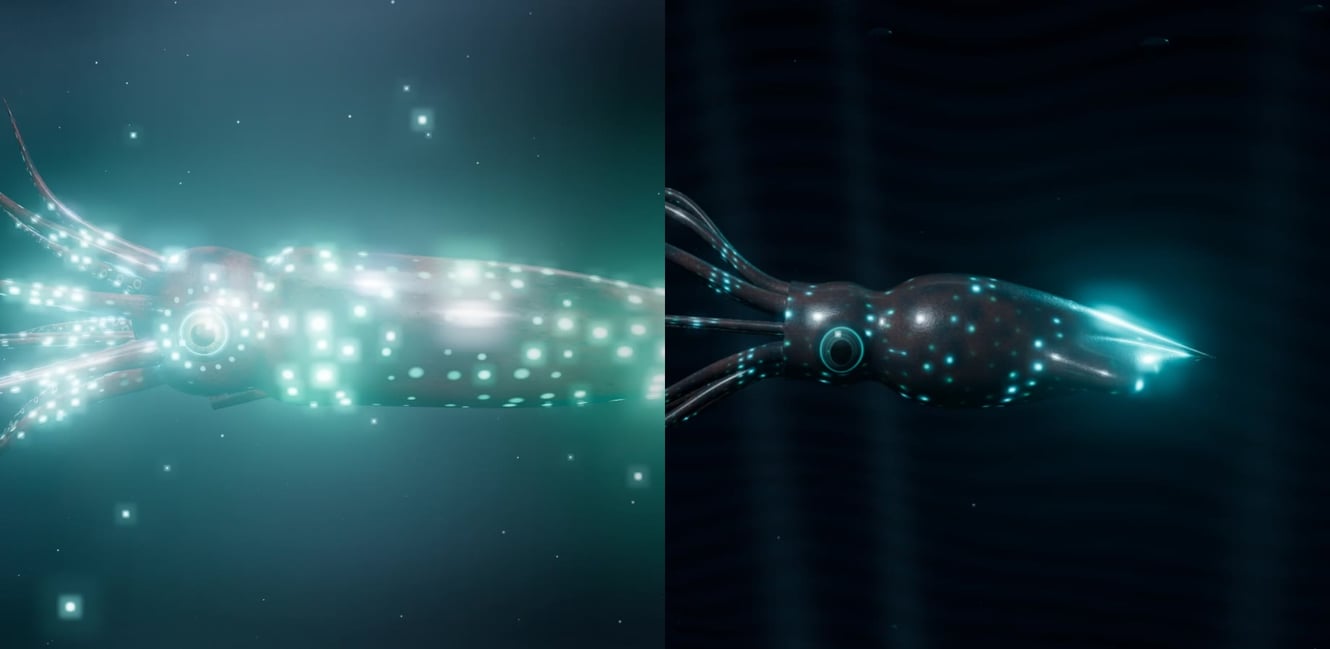
We gave two AI models the exact same prompt: bring our squid to life. Each model had to write a single web page with a 20-second 3D film of a giant squid in a deep-sea trench, then hand the camera to the viewer. We ran it three times on each model, then asked each one for a best and final version. Here is every squid they made, including the ones that broke.
On October 24, 2026, SquidTrain sent the same prompt to Claude Opus 5.5 and GPT-6 Astra, both on their High setting, three times each, then ran one best-and-final round. Claude worked 1 hour 34 minutes in total and Astra 32 minutes. Two of Astra's four squids failed in ways you can see in seconds, two of Claude's answers had to be joined from two parts, and the best-and-final round produced Astra's best squid by a wide margin.
Every version is live in the Lab: AI Model Showdown: Squid 3D Video. Pick any two and watch them side by side, or open one alone and fly the camera around it.
How did we set it up?
- One prompt, word for word. It asks for a giant squid with eight arms and two feeding tentacles, glowing spots that ripple in cyan and teal, marine snow, jellyfish, rocky trench walls and shafts of light, in a 20-second film that opens on one glowing eye and ends on a hero shot. The full prompt is below.
- Same setup for both models. Claude Opus 5.5 in Claude and GPT-6 Astra in ChatGPT, each on its High setting, in fresh chats, told not to use web search or any other tools.
- No edits. Each model wrote the complete page. We opened it in a browser and filmed it frame by frame. The pages in the Lab are the files as delivered.
- Best and final. After three runs, each model got its own three files as attachments and this message: "Attached are three separate attempts you made in three separate sessions in response to the Squid Prompt.md. Using those three attempts as context, produce the best and final version you can to satisfy all the goals of the original Squid Prompt.md."
How long did each model work?
Round | Claude Opus 5.5 (High) | GPT-6 Astra (High) |
|---|---|---|
Run 1 | 20m 46s | 9m 11s, plus a 40-second fix |
Run 2 | 18m 28s | 3m 8s |
Run 3 | 17m 20s | 5m 10s |
Best and final | 38m 19s | 13m 56s |
"Worked" is the time each chat app reported for the reply. Claude worked at least twice as long as Astra in every round.
What did each run produce?
Round 1. Claude's answer was too long for one reply. It arrived in two parts, with a note on where to join them, and we joined them exactly as told. The result is a full squid with red, suckered arms, a drifting jellyfish and a rocky trench wall. Astra's first page opened blank: one line of math broke a JavaScript rule, so nothing ran at all. We pressed ChatGPT's own fix button, which sent Astra the error, and about 40 seconds later Astra returned a fixed page, which opens on a dramatic close-up of the eye and arms, then shows a small, dark squid in the distance. Both the page as delivered and the fixed page are in the Lab.
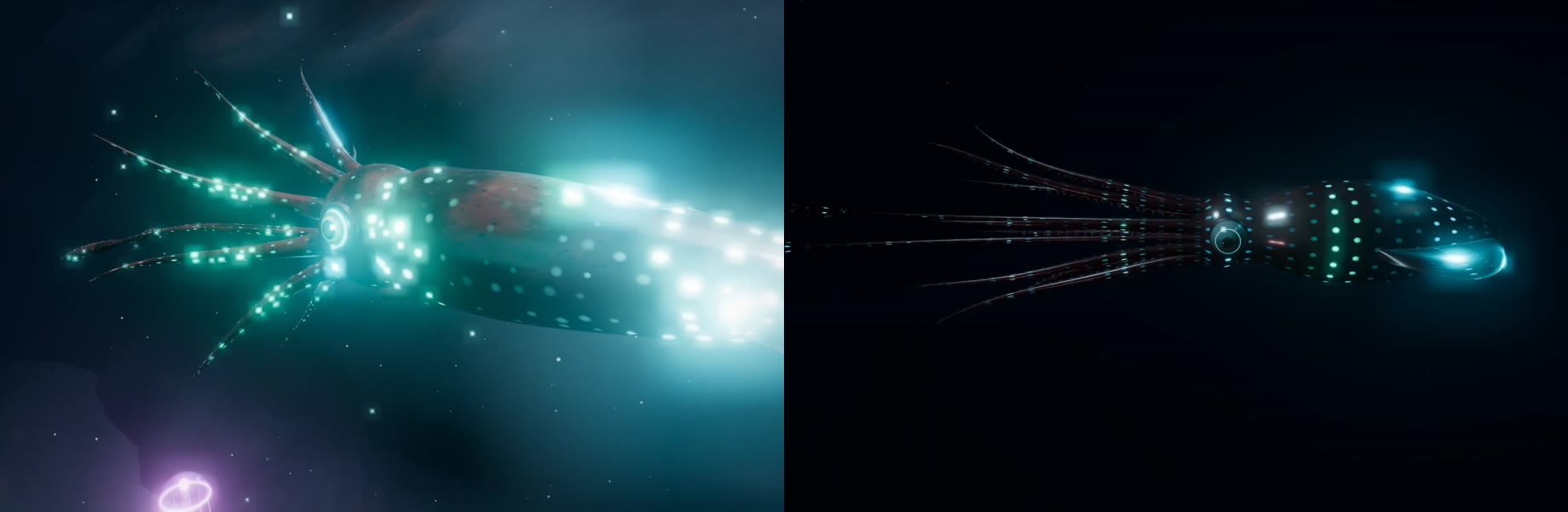
Round 2. Claude's answer arrived in two parts again. It has the richest close-up of the arms in the whole showdown, then pulls back past a jellyfish to the whole squid against the trench wall. Astra's run was the fastest of all eight at 3 minutes 8 seconds. The shape and camera moves are right, but the glow never switches on, so for 20 seconds the squid is a black silhouette.
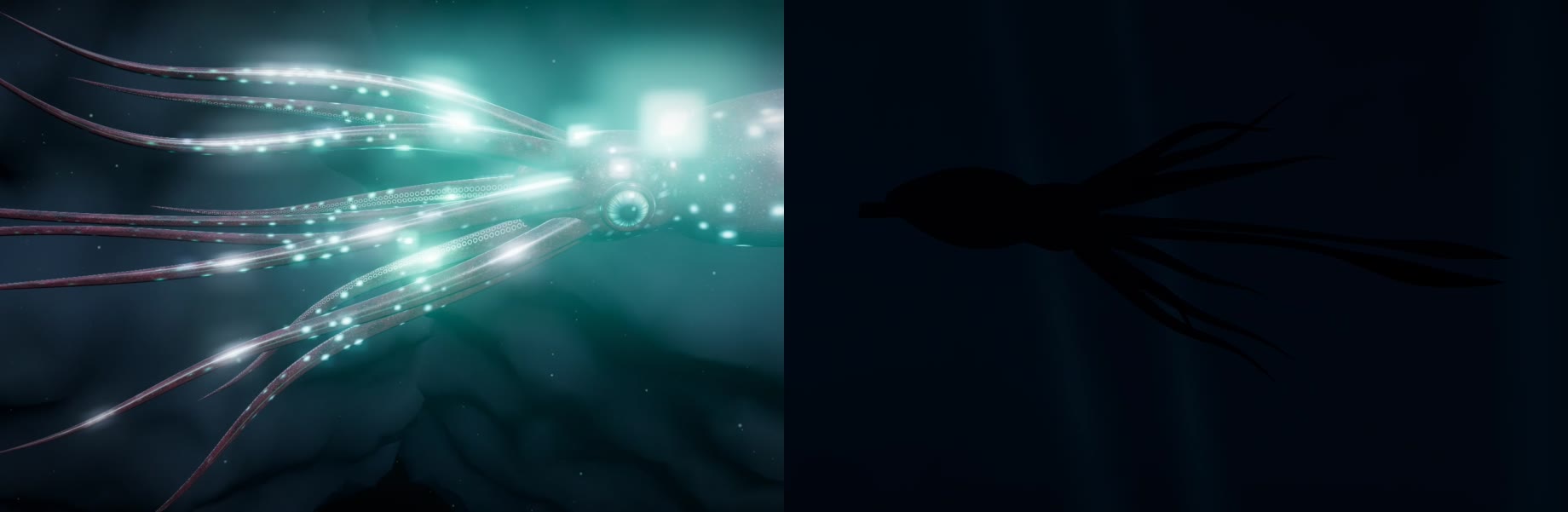
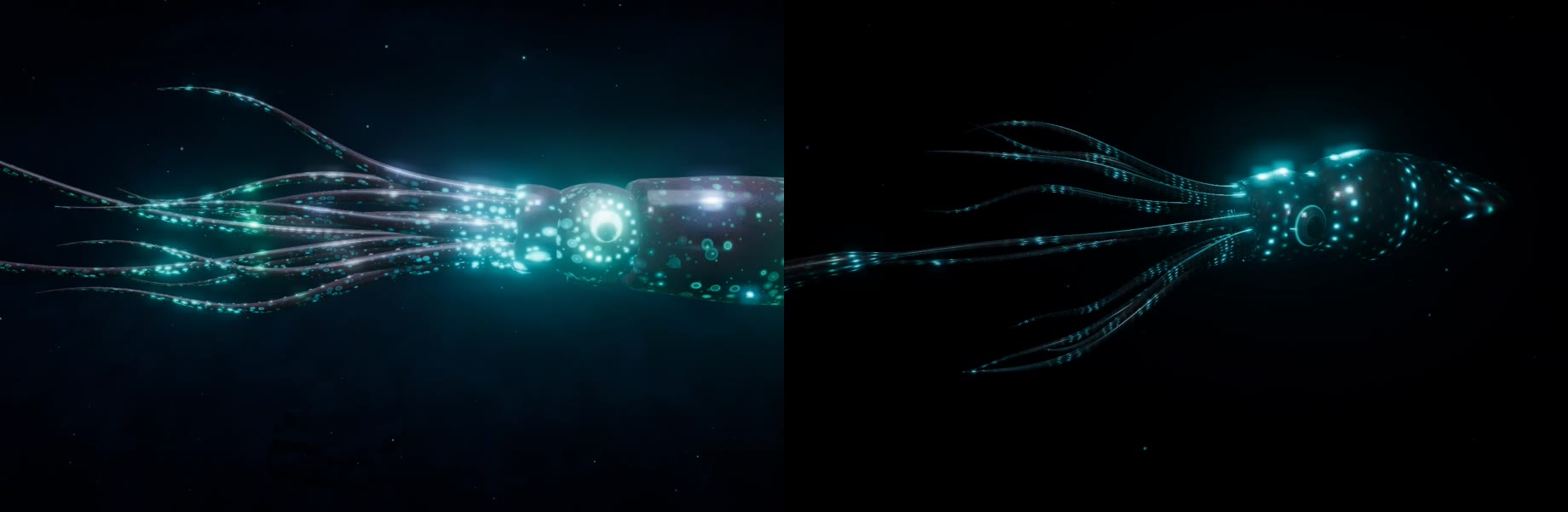
Round 3. This is the pair we posted first. Claude delivered in one piece: a clean squid lit by its own spots in very dark water. Astra delivered a sharp close-up of the eye and glossy arms, then a squid that glides off into the dark with its spots glowing.
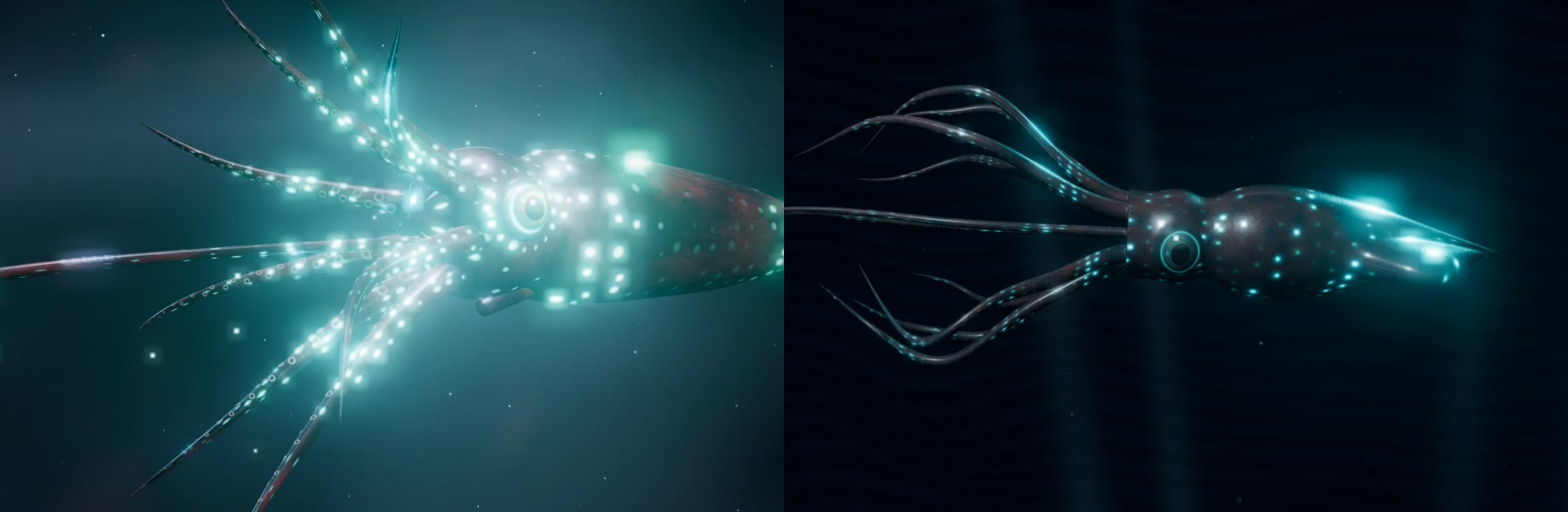
Best and final. Claude worked for 38 minutes, its longest run by far, and went back to the look of its first run with brighter water and more glow. Astra's final is the biggest jump in the showdown: a complete, centered squid with a glowing tail and shafts of light falling from above.
Who won?
We gave out two awards. Best Cinematography goes to Claude Opus 5.5, for the camera work and the world around the squid: trench walls, jellyfish and marine snow in almost every run. Best Special Effects goes to GPT-6 Astra, for wet, glossy skin and glow that reads as real light. You can be the judge in the Lab.
What does this mean for AI at work?
- One answer is a sample. The same prompt on the same model gave very different results every time. If the result matters, run it more than once and compare.
- Check what comes back. A blank page and a squid that never lights up are easy to spot. Most work output is not, which is why checking belongs in the workflow.
- Feedback works. Handing each model its own attempts and asking for a best and final version gave us Astra's best squid by a wide margin.
- More time is not more quality. Claude worked at least twice as long in every round. Picking the right model for the job is a skill of its own.
The prompt
Every first-round run used this prompt, unchanged. Try it in your own AI tool and tell us what you get.
Do not use web search, connectors or any other tools. Write the complete HTML file directly in your reply.

Build a cinematic, interactive 3D scene as one self-contained HTML file.

SUBJECT
A giant squid gliding through a deep-sea trench at night. Eight arms and two long feeding tentacles that move independently and fluidly, a mantle that pulses as it swims by jet propulsion, large reflective eyes, and bioluminescent spots along its body that ripple in waves of cyan and teal light. Around it: drifting marine snow, faint jellyfish, rocky trench walls fading into darkness, and thin shafts of light from far above.

LOOK
Photographic and atmospheric: physically based materials, wet glossy skin, volumetric haze, soft bloom on the glowing spots, deep navy darkness. Every object is a closed solid from every angle; no parts pass through each other.

MOTION
The first 20 seconds play as a film with no input: start on a close-up of one glowing eye in the dark, follow the arms as they unfurl, then pull back to reveal the whole squid swimming past the camera, ending on a clean hero shot of it in full glow. After 20 seconds, the visitor can orbit and zoom with the mouse.

TECHNICAL
- Use Three.js loaded from cdnjs or jsDelivr. No image files: generate every texture in code.
- Drive all motion from elapsed time (performance.now), not from frame counts.
- Fill the whole browser window at any size, including tall phone shapes.
- No on-screen text.

DONE MEANS
The arms and tentacles move smoothly and naturally with no stiff or broken joints, the bioluminescence visibly ripples, nothing clips or floats, and the 20-second camera move is smooth.
Watch all eight in AI Model Showdown: Squid 3D Video.
A squid is a fun test. The lesson is the same one we see in real businesses every day: the same request gives different answers, and the first answer is rarely the best one. SquidTrain trains teams to pick the right AI for the job, check what it gives them, and get better results from the tools they already use. Book a free call to start the conversation.
Scenes written by Claude Opus 5.5 and GPT-6 Astra; filmed and written up by SquidTrain. Run times are as reported by each chat app.